
You've probably done a 30-day challenge. Dry January, Sober October, a month off social media.
Buddhists have been doing a three-month one for about 2,500 years. It's called Vassa, the rains retreat, and in Laos and Thailand the day it ends is called Ok Phansa, "leaving the rains." This full moon, it ends again.
Here's where it comes from, what happens the night it ends, and what this season left me with.
Why the monks stay put
The origin story is in the Vinaya, the monks' rulebook. In the early days, monks wandered all year. During the monsoon, that meant walking through freshly planted fields, crushing young crops and the small creatures living in the wet ground. Villagers complained. Even birds settle down for the rains, they said. Why are these monks still walking around?
So the Buddha asked monks to stay in one place for the three months of the rainy season. (Vinaya, Mahāvagga III) At its root, the rule was about not trampling things. Over the centuries, that pause became the heart of the monastic year, a season to go deeper. Lay people joined in with commitments of their own.
The night it ends: call me out
You'd expect a season of hard practice to end with a party. It ends with something braver.
On the last full moon, monks gather for Pavāraṇā, which means "invitation." One by one, each monk invites the whole community to call him out. Roughly translated from the Pali:
Friends, tell me anything you've seen, heard, or even suspected. Out of compassion, tell me. If I see it, I'll make it right.
It started because one group of monks got through a retreat by agreeing not to talk at all, to avoid any arguments. The Buddha wasn't impressed. He compared it to cattle living side by side, saying nothing. Silence to dodge friction isn't harmony. (Vinaya, Mahāvagga IV)
And he didn't exempt himself. In one sutta, on Pavāraṇā night, the Buddha turns to five hundred monks and goes first: is there anything I've done or said that you'd fault me for? (Saṃyutta Nikāya 8.7)
Coming back down
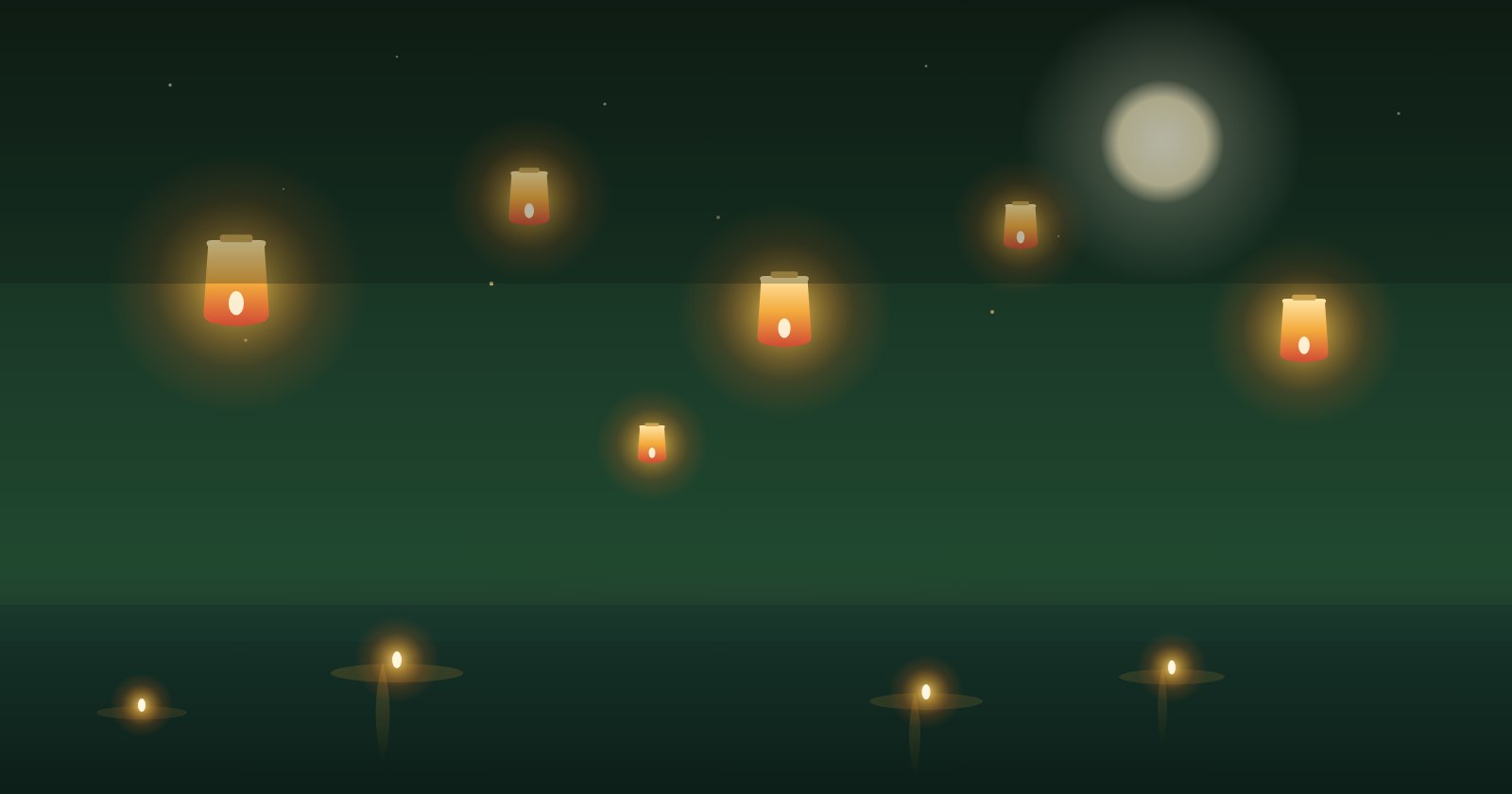
Later tradition adds one more story. During one rains retreat, the Buddha went up to a heaven realm to teach his mother, who had died a week after he was born. When the three months ended, he walked back down to earth on a staircase of gold, silver, and jewels. That's where this full moon's lanterns and candles come from. It's a welcome home.
I love that he came back. Whatever he found up there, he carried it down the stairs, into ordinary life.
My Vassa
Honestly? I didn't give up much this year. I mostly tried to take things on, because Vassa isn't only about giving something up. Sometimes it's about doing the thing you'd rather avoid, the way a monk who'd rather wander has to sit still.
I wanted to start working out. It did not happen. Not once.
I also keep a rule I don't talk about much. I'm not allowed to buy cigarettes. Notice that I didn't say I'm not allowed to smoke. A total ban eats me up. But not buying them, in a house where nobody smokes, leaves my mind thinking it still has an exit. Have I had one when it crossed my path? Yes. Have I bought a pack? No.
What I've really been practicing is watching the voice. It says: just this once. Just to get through tonight. You had a long weekend. You can quit again tomorrow.
So I talk back. "Okay. Let me finish this one thing first. Tomorrow." And tomorrow, I say it again. I'm not denying it. I'm just delaying it, and watching how it bends the story to get what it wants.
Near the end of this season, during a long work event, my body was in real pain, and I gave in to something I'd planned to skip. I heard the voice make its case. I still said yes. But I saw it, clearly, while it was happening.
That's the part I'm proud of. Not that I won every round, but that I could see where the pull came from, even when I followed it.
Every year is a step
This is why I keep doing it.
When I started practicing Vassa in high school, I gave up meat every year. At first it was hard. After a few years, it was almost nothing.
Later I tried giving up drinking for Vassa. It took two or three years of trying before I fully made it through. The year I finally did, I kept going for almost two years without drinking. Today it's barely part of my life.
I never forced that. Every year was a small step, and the steps added up.
One of the Buddha's discourses names, as one of the highest blessings, a mind that doesn't shake when the ups and downs of the world hit it. (Maṅgala Sutta, Sutta Nipāta 2.4) I don't think we get there by waiting for life to test us. We get there by walking the road on purpose, in a season we chose. So when life takes something we love, or hands us something we didn't want, we're not shattered. We've been here before.
Your own invitation
Maybe you didn't do Vassa. Maybe you just got through a hard season. Either way, here's what I'm trying this week:
- Look back honestly. What did you take on? Where did you slip? What did your mind say when it didn't get its way?
- Ask someone. A friend, a partner, a sibling you trust: Is there anything you've noticed in me lately that I should know? Then just listen. That's the hard part.
- Flip it as you come back down. I take what was good for me and try to keep it full-time. The things that don't serve me get a part-time pass, not the other way around.
None of this is a rule. It's just what I've found. Try it, and see for yourself.
Coming back muddy
Right after Vassa comes one more story. Thirty monks set out to spend the rains with the Buddha and didn't make it in time. They kept the rule anyway and stayed put, a few days' walk away. When the rains ended, they walked the rest of the way through mud and downpour, and arrived soaked, robes heavy and filthy. (Vinaya, Mahāvagga VII)
Nobody sent them back to clean up first. Their dirty robes were answered with new ones. That's where Kathina comes from, the robe offering, and I'll write about it soon. And when the rains begin again next year, I'll share why I do this. Maybe you'll try it with me.
But for now, hold on to those monks. Nobody comes out of the rains clean. I didn't.
So let me ask you something.
Has your mind ever told you that you really wanted something? Needed it, even? And somewhere underneath, was there a quieter voice that knew you didn't need it at all? And then the first voice got louder, and kept insisting?
Have you ever stopped to pull those two apart?
Next time, try this. Don't give in. Don't fight it either. Just sit back and wait. You're not saying no. You're not saying yes. You're just watching it squirm.
Watch what it tries. Watch how it bargains, what it promises, what reasons it suddenly finds. Watch it build the case that this time is different.
That's what Buddhists actually mean by mindfulness. The word gets borrowed a lot. People hear it and think of being calm, or being considerate of others. But the Pali word, sati, points somewhere much closer to home: knowing what your own mind is doing while it's doing it. What is it saying right now? What does it want? Is it telling you the truth, or is it lying to you?
Once you can see that voice, something shifts. It stops being you. It's just a voice, making its case. And a voice you can see is a voice you can wait out.
That's what three months of rain is really for.
So come back down, muddy and all. And the next time your mind tells you that you need it, don't argue and don't obey. Just pull up a chair, and watch.